Printable kettlebell workouts offer a convenient and effective way to integrate strength and conditioning into your routine. These PDF guides provide structured exercises,
allowing for focused training at home or on the go, maximizing efficiency and results.
Benefits of Kettlebell Training
Kettlebell training delivers a unique blend of strength, cardio, and flexibility, making it a highly efficient workout modality. Unlike traditional dumbbells, the kettlebell’s off-center weight challenges your core and stabilizer muscles with every movement, improving functional strength and balance.
Incorporating printable kettlebell workouts amplifies these benefits by providing structured routines for all fitness levels. These workouts enhance power development, boost metabolic rate, and improve grip strength. The dynamic nature of kettlebell exercises engages multiple muscle groups simultaneously, leading to greater calorie expenditure and improved overall conditioning. Regularly utilizing PDF-based routines ensures consistent progress and helps avoid plateaus, fostering a sustainable fitness journey.
Why Printable Workouts are Useful
Printable kettlebell workouts, often delivered as PDF documents, offer unparalleled convenience and accessibility. They eliminate the need for constant screen time during exercise, allowing you to focus on form and technique. Having a physical copy readily available means you can workout anywhere – home, gym, or outdoors – without relying on internet connectivity.
These resources often include clear exercise instructions and visual aids, making them ideal for beginners. PDF formats are easily saved, shared, and printed, enabling personalized workout plans. They promote consistency by providing a tangible reminder of your fitness goals and scheduled routines, fostering discipline and maximizing the effectiveness of your kettlebell training.

Kettlebell Weight Selection for Beginners
Kettlebell weights range from 5lb to 50lb (1kg-48kg), offering options for all fitness levels. Beginners should start lighter, focusing on form before increasing weight.
Choosing the Right Kettlebell Weight
Selecting the appropriate kettlebell weight is crucial for beginners to ensure proper form and prevent injuries. Starting too heavy can compromise technique, while too light may not provide sufficient challenge. For women, a good starting point is often 8-12kg (18-26lbs), and for men, 12-16kg (26-35lbs).
However, individual strength levels vary significantly. If you’re unsure, it’s best to err on the lighter side. Consider purchasing a lighter and a moderate weight to allow for varied exercises and progression. A package with multiple weights, or an adjustable kettlebell, can be a cost-effective solution. Remember, mastering the movements is paramount before increasing the load. Prioritize control and technique over lifting heavy weights initially.
Understanding Kettlebell Weight Ranges (5lb ౼ 50lb / 1kg ⎻ 48kg)
Kettlebell weights span a broad range, typically from 5lbs (1kg) to 50lbs (48kg), catering to diverse fitness levels. Lighter weights (5-10lbs/2-5kg) are ideal for beginners focusing on form and technique, particularly for exercises like swings and Turkish get-ups. Intermediate users (15-25lbs/7-12kg) can progress to more challenging variations and higher rep ranges.
Advanced lifters (35-50lbs/16-23kg+) utilize heavier weights for strength and conditioning circuits. Adjustable kettlebells offer versatility, combining multiple weights into one, saving space and money. Consider your current strength, fitness goals, and exercise experience when selecting a weight. Don’t hesitate to start lighter and gradually increase the load as you improve.
Essential Kettlebell Exercises
Kettlebell training centers around dynamic, full-body movements like swings, squats, and presses. Mastering these foundational exercises builds strength, endurance, and coordination effectively.
Kettlebell Swings: Technique and Variations
Kettlebell swings are a cornerstone exercise, demanding proper technique for safety and effectiveness. Initiate the movement with a hip hinge, keeping your back straight and core engaged. Drive the kettlebell forward using your hips, not your arms, achieving momentum.
Focus on a powerful hip extension to propel the kettlebell to chest height. Control the descent, absorbing the impact with your glutes and hamstrings. Variations include Russian swings (to chest height) and American swings (overhead), increasing intensity.
Beginners should start with lighter weights, prioritizing form over power. Printable workout PDFs often detail swing progressions, ensuring gradual improvement and minimizing injury risk. Mastering the swing unlocks a foundation for more advanced kettlebell movements.
Kettlebell Squats: Form and Progression
Kettlebell squats enhance lower body strength and stability, differing from barbell squats due to the offset weight. Hold the kettlebell close to your chest (goblet squat) or at your sides. Maintain a straight back, engaged core, and descend as if sitting into a chair, keeping your knees tracking over your toes.
Progression starts with bodyweight squats, then goblet squats with lighter kettlebells. As strength increases, explore variations like single-leg squats or overhead squats (advanced). Printable PDF workouts often illustrate proper form and offer structured progressions.
Focus on depth and control, ensuring your thighs are parallel to the ground. Kettlebell squats build functional strength, improving everyday movements and athletic performance.
Kettlebell Presses: Shoulder and Core Engagement
Kettlebell presses effectively target the shoulders, triceps, and core. Two primary variations exist: the kettlebell shoulder press and the floor press. The shoulder press requires stability and control, initiating the movement from the shoulders while maintaining a braced core.
The floor press limits range of motion, focusing on triceps and shoulder strength. Proper form involves a stable base, engaged core, and controlled movement throughout. PDF printable workouts often detail step-by-step instructions and progressions;
Begin with lighter weights, prioritizing form over load; Kettlebell presses build upper body strength and improve shoulder stability, contributing to overall functional fitness.
Sample Printable Kettlebell Workout Routines
PDF printable kettlebell workouts offer varied routines for all levels, from beginner full-body circuits to advanced conditioning. These guides provide structured exercises for optimal results.
Beginner Full-Body Kettlebell Workout
This PDF printable kettlebell workout is designed for those new to kettlebell training, focusing on foundational movements and building strength. Begin with a 5-minute warm-up, including dynamic stretches like arm circles and leg swings. Perform 3 sets of 10 repetitions for each exercise, resting 60 seconds between sets.
The routine includes: Kettlebell Swings (focus on hip hinge), Kettlebell Squats (maintain a straight back), Kettlebell Romanian Deadlifts (hamstring focused), Kettlebell Overhead Press (controlled movement), and Kettlebell Rows (core engaged). Prioritize proper form over weight; start with a lighter kettlebell (8-12kg/18-26lbs) and gradually increase as strength improves. Finish with a 5-minute cool-down, holding static stretches for 30 seconds each.
Intermediate Kettlebell Strength Workout
This PDF printable kettlebell workout builds upon foundational strength, incorporating more challenging exercises and increasing volume. Begin with a dynamic warm-up (5 minutes) and conclude with static stretching (5 minutes). Perform 3-4 sets of 12-15 repetitions for each exercise, with 45-60 seconds rest.
The routine features: Kettlebell Clean and Press, Kettlebell Goblet Squats (holding the kettlebell close to the chest), Kettlebell Turkish Get-Ups (focus on control), Kettlebell Single-Leg Deadlifts, and Kettlebell Windmills. Utilize a moderate kettlebell weight (16-24kg/35-53lbs). Concentrate on maintaining proper form throughout each movement to prevent injury and maximize effectiveness. Adjust weight as needed to maintain challenge.
Advanced Kettlebell Conditioning Circuit
This PDF printable kettlebell workout is designed for experienced individuals seeking a high-intensity, full-body challenge. Perform each exercise for 45 seconds, followed by 15 seconds of rest. Complete 4 rounds of the entire circuit, with a 2-minute rest between rounds. Prioritize explosive movements and minimal rest to elevate your heart rate and improve conditioning.
The circuit includes: Kettlebell Snatches, Kettlebell Clean & Jerks, Kettlebell Renegade Rows (in a plank position), Kettlebell Figure 8s (around the legs), and Kettlebell Sprawls. Select a challenging kettlebell weight (24-32kg/53-71lbs). Focus on maintaining impeccable form even under fatigue; This workout demands significant strength, power, and endurance.
Workout Structure and Considerations
PDF printable kettlebell workouts should incorporate a dynamic warm-up, focused exercise sets, and a cool-down. Proper form and progressive overload are crucial for safe, effective training.
Warm-up and Cool-down Routines
PDF printable kettlebell workouts benefit significantly from dedicated warm-up and cool-down sections. A proper warm-up prepares your muscles and joints for the demands of kettlebell training, reducing injury risk. Consider dynamic stretches like arm circles, leg swings, and torso twists for 5-10 minutes.
Prior to heavier lifts, incorporate lighter kettlebell movements, mirroring the exercises in your workout, but at a reduced intensity. Conversely, a cool-down aids recovery and improves flexibility. Static stretches, holding each stretch for 20-30 seconds, targeting major muscle groups used during the workout, are ideal.
Examples include hamstring stretches, shoulder stretches, and torso twists. Including these routines within your PDF ensures a well-rounded and safe training experience, maximizing benefits and minimizing potential strain.
Rep Ranges and Set Structures
PDF printable kettlebell workouts should clearly define rep ranges and set structures for optimal results. For beginner workouts, focus on higher repetitions (12-15) with 2-3 sets to build endurance and master technique. As strength increases, transition to moderate reps (8-12) with 3-4 sets.
Advanced routines may utilize lower reps (5-8) with heavier kettlebell weights and 4-5 sets to maximize strength gains. Incorporate rest periods between sets – 60-90 seconds for strength-focused sets, and 30-60 seconds for endurance-based sets.
A well-designed PDF will specify these parameters for each exercise, ensuring users understand the intended intensity and volume. Varying rep ranges and set structures prevents plateaus and promotes continuous progress.
Importance of Proper Form and Technique
PDF printable kettlebell workouts must emphasize the critical importance of proper form and technique to prevent injuries and maximize effectiveness. Kettlebell exercises, unlike traditional weightlifting, require a higher degree of technical skill due to the off-center weight distribution.
A quality PDF guide will include detailed instructions and, ideally, visual aids (images or links to videos) demonstrating correct form for each exercise. Prioritize mastering the movement patterns before increasing weight. Incorrect form can lead to strains, sprains, or more serious injuries.
Focus on core engagement, maintaining a neutral spine, and controlled movements throughout each repetition. Remember, quality over quantity – perfect form is paramount.
Kettlebell Types and Features
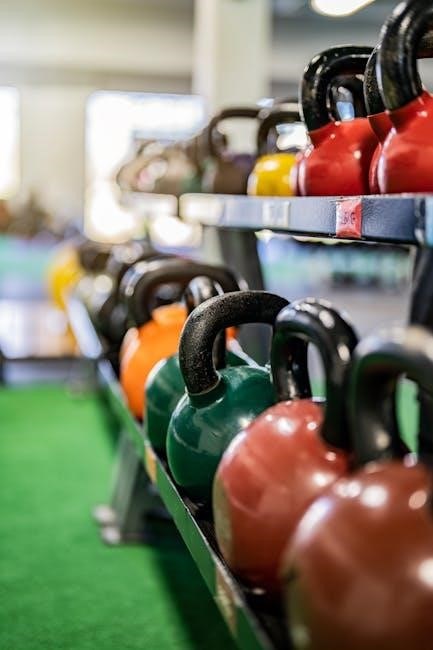
PDF printable kettlebell workouts benefit from understanding available kettlebell types: competition, cast iron, and adjustable models, each offering unique features and benefits.
Competition Grade Kettlebells
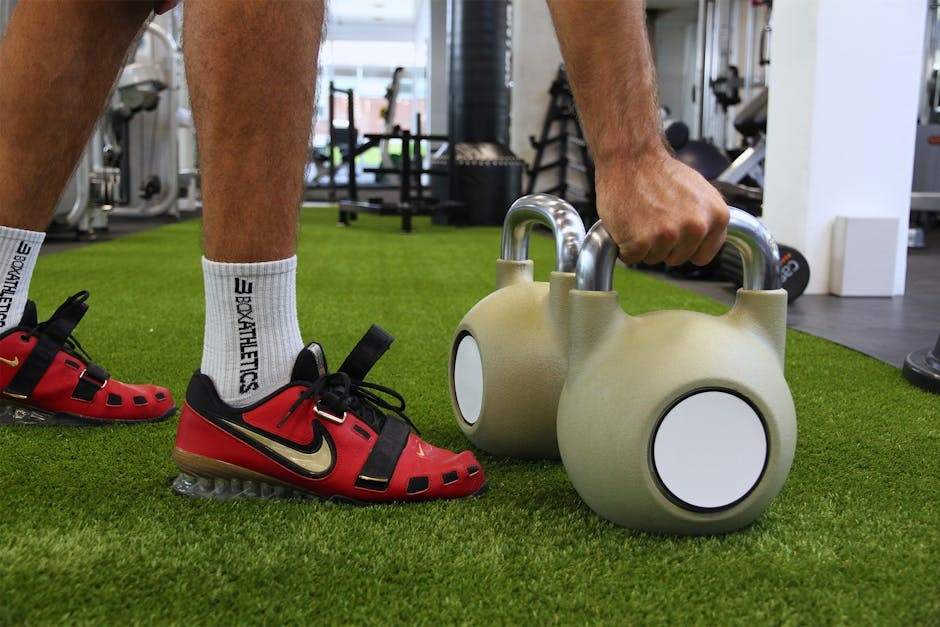
Competition grade kettlebells are specifically designed for the sport of kettlebell lifting, adhering to strict standards for size, shape, and weight distribution. These kettlebells feature a uniform handle thickness across all weight increments, crucial for seamless transitions during complex movements like snatches and cleans.
Their consistent dimensions allow athletes to focus on technique and power development without grip adjustments. While excellent for serious training, they may not be the most beginner-friendly option due to their precise specifications. Utilizing PDF printable kettlebell workout routines designed for competition bells ensures proper form and progression. They are often more expensive than cast iron options, reflecting their quality and precision engineering.
Cast Iron Kettlebells
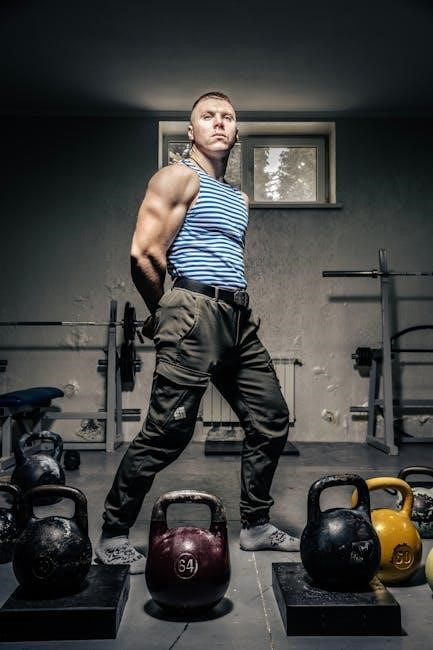
Cast iron kettlebells represent a traditional and cost-effective option for strength training. These are typically molded from a single piece of iron, offering durability and a classic aesthetic. However, handle thickness can vary slightly between weights, potentially impacting grip consistency during dynamic exercises.
They are well-suited for a wide range of exercises, making them ideal for following a PDF printable kettlebell workout plan. Beginners often find cast iron kettlebells accessible due to their affordability and availability. While not designed for competitive lifting, they provide a solid foundation for building strength and endurance. Consider a powder-coated finish to protect against rust and enhance grip.
Adjustable Kettlebells: Space-Saving Solutions
Adjustable kettlebells are a fantastic option for those with limited space or who want versatility in their training. Featuring incremental weight options within a single unit, they eliminate the need for multiple kettlebells, streamlining your home gym setup. This is particularly beneficial when utilizing a PDF printable kettlebell workout that progresses in weight over time.
These kettlebells offer convenience and cost-effectiveness, allowing you to adapt to various exercises and fitness levels. They’re ideal for beginners and experienced users alike, providing a scalable challenge. Look for models with a secure locking mechanism to ensure safety during intense workouts. They are a practical solution for consistent training.

Safety Precautions for Kettlebell Training
Prioritize proper form when following a PDF printable kettlebell workout; maintain control, use a secure grip, and avoid common injuries through technique.
Proper Grip and Control
Maintaining a secure grip is paramount during any PDF printable kettlebell workout. Unlike dumbbells with balanced weight distribution, kettlebells feature an offset center of gravity, demanding focused control. Avoid a death grip; instead, aim for a firm, yet relaxed hold, allowing the kettlebell to move naturally.
Focus on engaging your core and maintaining a neutral spine throughout each exercise. Control the kettlebell’s momentum, resisting the urge to let it pull you. This prevents injury and maximizes effectiveness. A proper grip isn’t solely about hand strength; it’s about utilizing your entire body to stabilize and guide the weight. Review instructional videos alongside your PDF to visualize correct technique and ensure safe, effective training.

Avoiding Common Kettlebell Injuries
When following a PDF printable kettlebell workout, prioritizing safety is crucial. Common injuries often stem from improper form, particularly during swings and snatches. Avoid rounding your back, and always engage your core to maintain spinal stability. Beginners should start with lighter weights and master the technique before increasing the load.
Wrist injuries can occur with poor grip or excessive force. Focus on a relaxed yet firm grip, and avoid “steering” the kettlebell. Shoulder impingement is another risk; ensure proper shoulder packing and avoid overarching. Carefully review the exercise demonstrations within your PDF guide and consider consulting a fitness professional to refine your technique and minimize injury risk.