
E46 Auto to Manual Swap: A Comprehensive Guide
Embarking on an E46 automatic to manual transmission swap is a rewarding, albeit complex, undertaking. This guide details the process,
covering everything from initial planning to final adjustments, ensuring a successful conversion.
The BMW E46, produced from 1999-2006, remains a popular platform for enthusiasts. Converting an automatic E46 to a manual transmission is a frequently considered modification, offering a more engaging driving experience. This swap isn’t simply a gearbox change; it’s a system overhaul. Expect to replace numerous components, including the transmission itself, clutch, flywheel, shifter mechanism, pedal assembly, and potentially the driveshaft.
Success hinges on meticulous planning and a thorough understanding of the required parts and procedures. Forums dedicated to E46 models (like those active since 2011) provide invaluable resources and shared experiences. BMW-specific tools, such as those found in BMW Standard Tools (INPA, NCS Expert), are often necessary for post-swap ECU coding and diagnostics. This guide aims to provide a comprehensive overview, empowering you to tackle this project with confidence.
Why Swap? Benefits and Considerations
The primary motivation for an E46 auto-to-manual swap is enhanced driver engagement. Manual transmissions offer greater control, allowing for more precise gear selection and a more connected feel. Performance gains, while not dramatic, are often realized due to reduced drivetrain losses. However, this conversion isn’t without its drawbacks.
Consider the complexity and cost. The swap requires significant mechanical skill, specialized tools, and a substantial investment in parts. Potential issues, like coding errors with the ECU (requiring BMW Standard Tools), or clutch engagement problems, can arise. Furthermore, resale value may not fully recoup the investment. Carefully weigh these factors before committing to the project.
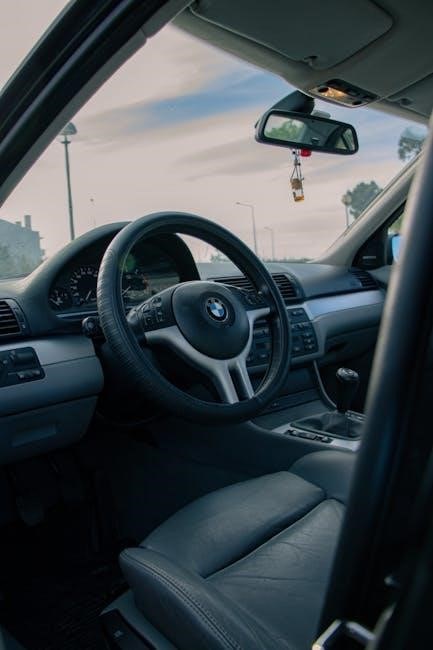
Planning the Swap: Parts and Tools
Successful execution hinges on meticulous planning and sourcing the correct components. A comprehensive parts list, alongside specialized BMW tools, is crucial for a smooth and efficient conversion.
Essential Parts List: Transmission, Clutch, Flywheel
The core of the swap revolves around acquiring a compatible manual transmission. Options include the Getrag 220 or 235, depending on your engine and desired gear ratios. A performance clutch kit, including the pressure plate, disc, and throw-out bearing, is vital for reliable power transfer.
Don’t overlook the flywheel! It must be matched to your engine and clutch combination; a lightweight flywheel can enhance engine responsiveness. Ensure the transmission, clutch, and flywheel are in good working condition, potentially opting for rebuilt or new components for longevity. Consider sourcing these parts from reputable BMW specialists or online suppliers to guarantee compatibility and quality.
Verify the transmission input shaft spline count matches your engine.
Supporting Components: Shifter, Driveshaft, Pedal Assembly
Beyond the core components, several supporting parts are crucial for a successful swap. A manual transmission shifter mechanism, complete with linkage, is essential for gear selection. The driveshaft must be either a manual-specific unit or modified to fit the manual transmission’s output flange.
A complete manual pedal assembly – brake, clutch, and accelerator – is non-negotiable. This includes the clutch master cylinder and slave cylinder. Carefully inspect the condition of these components, as wear can lead to issues;
Consider the center console; modifications may be needed to accommodate the shifter. Sourcing these parts together as a kit can simplify the process.
Tools Required: Specialized BMW Tools & General Mechanics
A successful E46 auto-to-manual swap demands a comprehensive toolkit. General mechanics tools – sockets, wrenches, ratchets, torque wrench – are fundamental. However, BMW-specific tools are often necessary for certain tasks, particularly those involving the VANOS system or electrical diagnostics.
Diagnostic software, like INPA or NCS Expert, is invaluable for ECU coding post-installation. A creeper, jack stands, and a transmission jack are essential for safe vehicle access and component handling.
Don’t forget specialized tools for clutch alignment and flywheel locking. Having these tools readily available will streamline the process and prevent potential damage.
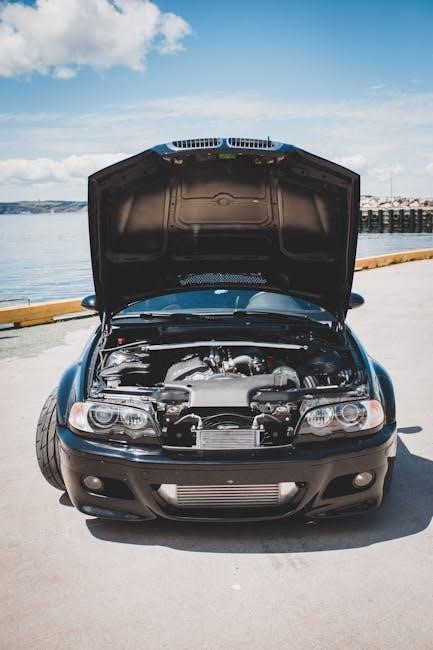
Preparation: Vehicle Disassembly
Thorough preparation is key! Carefully disconnect the battery and begin removing the automatic transmission components, documenting each step for reassembly ease.
Removing the Automatic Transmission
Begin by safely lifting and securing the vehicle. Drain the automatic transmission fluid, ensuring proper disposal methods are followed. Disconnect the driveshaft, being mindful of any residual fluid. Next, detach the shift linkage and all wiring connected to the transmission.
Support the engine from above to prevent it from tilting when the transmission is removed. Unbolt the transmission mounts and carefully lower the transmission using a transmission jack. This process requires patience and attention to detail, as several components are interconnected. Take photographs throughout the removal process to aid in reinstallation and ensure no crucial steps are missed. Remember to label all disconnected wires and hoses for easy reconnection later.
Disconnecting Wiring Harnesses and Sensors
Carefully disconnect all wiring harnesses connected to the automatic transmission. This includes the transmission range sensor, speed sensors, and any associated connectors. Label each harness clearly with tape and a marker to simplify reinstallation. Pay close attention to the connector orientation to avoid damage during reconnection.
Remove the sensors attached to the transmission housing, such as the reverse light switch. Document the location of each sensor for accurate placement on the manual transmission. Be gentle when disconnecting connectors to prevent broken clips or damaged wiring. A wiring diagram specific to your E46 model year is highly recommended for this step.
Removing Automatic Transmission Components
Once the transmission is supported, begin removing components attached to it; This includes the torque converter, which is bolted to the flexplate. Detach the driveshaft from the transmission’s output flange, noting its orientation. Carefully remove the transmission cooler lines, capping them immediately to prevent fluid loss and contamination.
Disconnect the shift linkage and selector cable from the transmission. Remove the transmission mount and any associated brackets. Ensure all bolts and hardware are accounted for and stored safely. Double-check the area around the transmission for any remaining connections before attempting to lower it.

Installation: Manual Transmission Setup
With the automatic transmission removed, focus shifts to installing the manual components. This phase involves carefully positioning the new transmission, clutch, and flywheel assembly.
Installing the Manual Transmission
Carefully align the manual transmission with the engine, ensuring the pilot bearing is properly seated. Supporting the transmission with a transmission jack is crucial for controlled positioning and safety. Gently guide the transmission onto the engine, rotating it slightly to engage the splines of the clutch disc.
Bolting the transmission to the engine should be done incrementally, tightening bolts in a crisscross pattern to ensure even pressure and prevent warping. Double-check all mounting points and hardware. Before fully securing, verify the transmission is flush against the engine block. Improper alignment can lead to vibrations and damage. Remember to install the clutch slave cylinder at this stage, connecting the hydraulic line carefully to avoid air bubbles.
Clutch and Flywheel Installation
Begin by thoroughly cleaning the flywheel surface to ensure proper clutch disc adhesion. Install the flywheel, ensuring it’s correctly oriented and torqued to BMW’s specifications – a torque wrench is essential here. Next, carefully position the clutch disc, aligning it with the pilot bearing in the crankshaft.
Install the pressure plate, again ensuring correct orientation, and tighten the bolts gradually in a star pattern. This prevents uneven pressure and potential warping. Before proceeding, verify the clutch disc rotates freely. A properly installed clutch is vital for smooth engagement and preventing premature wear. Consider using a new throw-out bearing for optimal performance.
Pedal Assembly Installation
Installing the manual pedal assembly requires careful attention to detail. Begin by removing the automatic brake pedal and installing the clutch pedal, ensuring it’s securely fastened to the chassis. Connect the clutch master cylinder, carefully bleeding the system to eliminate air bubbles; Proper brake pedal positioning is also crucial for comfortable operation.
Verify full pedal travel and smooth operation of both clutch and brake pedals. Adjust the pedal height if necessary to suit your driving preference. A correctly installed pedal assembly is fundamental for precise gear changes and safe braking. Double-check all connections for tightness and security.

Driveshaft and Linkage
Proper driveshaft selection and shifter linkage installation are vital for a smooth transition. Ensuring correct length and compatibility is key for optimal performance.
Driveshaft Compatibility and Installation
Determining driveshaft compatibility is crucial; automatic and manual E46 models utilize different lengths. Typically, a manual transmission swap requires a driveshaft specifically designed for a manual-equipped E46. Using the incorrect driveshaft can lead to vibrations, driveline damage, or even failure.
Installation involves carefully aligning the driveshaft with the transmission output flange and the differential input flange. Ensure the U-joints are properly greased and that all hardware is tightened to the manufacturer’s specifications.
Pay close attention to the center support bearing (if equipped) and its mounting points. Verify there’s no interference and that the driveshaft rotates freely without binding. A properly installed driveshaft is essential for a quiet and reliable drivetrain.
Shifter Mechanism Installation and Adjustment
Installing the manual shifter mechanism requires careful attention to detail for precise gear engagement. Begin by mounting the shifter assembly to the transmission tunnel, ensuring proper alignment with the shift linkage. Connect the shift linkage rods, verifying they move freely without binding.
Adjustment is critical; incorrect adjustment can result in difficulty selecting gears or imprecise shifting. Follow the BMW workshop manual’s procedure for adjusting the shift linkage, focusing on neutral position accuracy.
A properly adjusted shifter provides a crisp, confident feel, enhancing the driving experience. Test all gears thoroughly and refine adjustments as needed for optimal performance.
Center Console Modifications
The E46 center console requires modifications to accommodate the manual shifter. Removing the existing automatic transmission selector opening is the first step, often involving cutting or fabricating a new console piece.
Many aftermarket solutions, or donor consoles from manual E46 models, provide a pre-cut opening for the manual shifter. Ensure a snug and secure fit, preventing unwanted movement or rattles during driving.
Carefully consider the aesthetics and functionality of the modified console. Proper installation maintains a clean, factory-like appearance while providing easy access to the shifter.
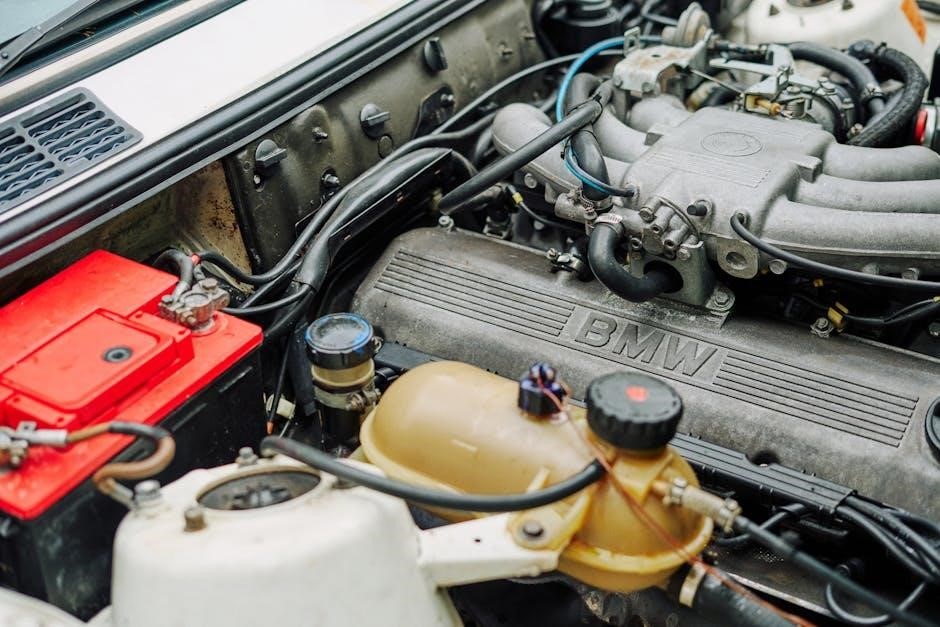
Electrical System Integration
Integrating the manual transmission requires wiring harness modifications and ECU coding. Correct connections and programming are vital for proper function and to avoid error messages.
Wiring Harness Modifications and Connections
The E46’s wiring harness differs significantly between automatic and manual configurations, necessitating careful modifications. You’ll need to address the reverse light switch, clutch switch, and potentially the gear selector input. Specifically, the automatic transmission range sensor signal must be removed and the clutch switch signal integrated.
This often involves splicing into existing wires and adding new connectors. Ensure all connections are secure and properly insulated to prevent shorts. Refer to detailed wiring diagrams specific to your E46 model year. Incorrect wiring can lead to transmission malfunctions or ECU errors. Pay close attention to pin assignments and wire colors for accurate connections. Double-check your work before proceeding to the next step.
ECU Coding for Manual Transmission
After the physical swap, the E46’s Engine Control Unit (ECU) requires coding to recognize the manual transmission. Failing to do so will result in various errors, including incorrect speedometer readings and potentially limp mode. BMW Standard Tools, like INPA or NCS Expert, are essential for this process.
You’ll need to disable the automatic transmission-related functions and enable the manual transmission settings. This involves changing parameters within the ECU’s software. Incorrect coding can cause significant issues, so proceed with caution and follow reliable guides. Ensure you have a stable power supply during coding to avoid data corruption. Verify successful coding with a diagnostic scan.
Sensor Integration and Calibration
Proper sensor integration is crucial for accurate operation post-swap. The E46 relies on various sensors, including the crankshaft position sensor and vehicle speed sensor, to function correctly. Ensure all sensors are correctly connected and functioning.
Calibration may be necessary for certain sensors, particularly the vehicle speed sensor, to ensure accurate speedometer readings. Diagnostic tools can assist in verifying sensor data and performing calibrations. Pay close attention to any error codes related to sensors and address them promptly. Incorrect sensor data can lead to poor engine performance or transmission issues.

Fluid and Cooling Systems
Selecting the correct transmission fluid and verifying the cooling system’s integrity are vital steps. Proper fluid levels and cooling prevent damage during operation.
Transmission Fluid Selection and Filling
Choosing the right transmission fluid is crucial for the longevity and smooth operation of your newly installed manual gearbox. BMW specifies a GL-4 75W-90 gear oil for most E46 manual transmissions, but always double-check your specific model’s requirements. Avoid GL-5 fluids, as they can corrode the synchronizers.
When filling, the transmission typically requires around 1.3 ‒ 1.4 liters of fluid. Locate the fill plug on the side of the transmission and carefully remove it. Using a pump, slowly fill the transmission until fluid begins to trickle out of the fill hole. Replace the fill plug, tightening it to the specified torque. Ensure no leaks are present before proceeding. Proper fluid level is essential for optimal performance and preventing damage.
Cooling System Considerations
While a manual transmission swap doesn’t directly impact the engine’s cooling system, it’s wise to inspect it thoroughly. The removal and reinstallation of components can sometimes disturb coolant lines or the radiator. Check for any leaks or damage to hoses, the radiator, and the expansion tank.
Ensure the cooling system is functioning optimally before extensive driving. A properly functioning cooling system prevents overheating, which can cause significant engine damage. Consider flushing the coolant and replacing the thermostat as preventative maintenance during the swap. Maintaining optimal engine temperature is vital for the new drivetrain’s reliability.

Post-Installation Checks and Adjustments
After the swap, meticulous checks are crucial. Bleed the clutch, test all gears, and troubleshoot any issues before a final road test for optimal performance.
Bleeding the Clutch System
Proper clutch bleeding is paramount after an E46 auto-to-manual swap, ensuring optimal pedal feel and engagement. Air trapped within the hydraulic system will result in a spongy pedal and difficulty shifting. Begin by locating the clutch slave cylinder bleed screw. Have a helper repeatedly depress and hold the clutch pedal while you open the bleed screw, allowing fluid and air to escape into a clear hose submerged in fluid.
Continue this process until only clean, bubble-free fluid emerges. Regularly check the clutch master cylinder reservoir to prevent it from running dry, which would introduce more air into the system. A pressure bleeder can simplify this process, providing consistent pressure. Thorough bleeding guarantees smooth and reliable gear changes, maximizing the enjoyment of your newly converted E46.
Testing and Troubleshooting
Post-swap testing is crucial for identifying and resolving any issues. Begin with a thorough static check: verify all connections, fluid levels, and pedal operation. Start the engine and carefully engage each gear, listening for unusual noises. A test drive on a safe, open road is essential. Pay attention to clutch engagement, shift quality, and any vibrations.
Common problems include coding errors (requiring NCS Expert), clutch engagement issues (potentially needing adjustment or re-bleeding), and driveshaft vibrations (inspecting for imbalance or incorrect fitment). Address any concerns promptly to prevent further damage. Utilize E46 forums for community support and troubleshooting guidance.
Final Inspection and Road Test
Before declaring victory, a meticulous final inspection is paramount. Double-check all bolts for proper torque, ensuring secure connections throughout the drivetrain. Verify the shifter mechanism operates smoothly through all gears, with no binding or excessive play. Confirm the clutch pedal feels consistent and engages correctly.
A comprehensive road test should include city and highway driving, evaluating shift quality, clutch feel, and overall performance. Listen for any unusual noises or vibrations. Address any remaining issues before enjoying your newly converted E46. Document the swap process for future reference and potential resale value.

Common Issues and Solutions
Post-swap, expect potential coding errors, clutch engagement problems, or driveshaft vibrations. Addressing these promptly with diagnostics and adjustments ensures optimal performance.
Coding Errors and ECU Problems
Following the manual swap, the BMW’s Engine Control Unit (ECU) often requires recoding to recognize the manual transmission. Failure to do so can result in various issues, including the disabling of features like traction control or even preventing the engine from starting. BMW Standard Tools, specifically NCS Expert, is commonly used for this purpose.
Common coding errors involve incorrect vehicle order codes or mismatched transmission settings. Carefully verify all coding parameters against known good configurations for E46 manual transmission vehicles. If coding attempts fail, double-check connections to the OBDII port and ensure the software is correctly configured for your vehicle’s VIN. Incorrect coding can also trigger warning lights on the dashboard, necessitating further diagnostic scans.
Persistent ECU problems might indicate underlying electrical issues or a faulty ECU itself, requiring professional diagnosis.
Clutch Engagement Issues
Difficulty engaging the clutch smoothly, or experiencing a soft pedal, are common post-swap concerns. These issues often stem from improper clutch bleeding, leaving air trapped within the hydraulic system. Thoroughly bleed the clutch line, starting at the slave cylinder and working towards the master cylinder, until a firm pedal feel is achieved.
Incorrect clutch disc installation or a warped pressure plate can also cause engagement problems. Verify the clutch disc is oriented correctly and the pressure plate is seated flush against the flywheel. A failing clutch master or slave cylinder can also contribute to these symptoms, requiring replacement.
Ensure proper pedal adjustment for optimal travel and engagement point.
Driveshaft Vibration
Post-swap driveshaft vibration frequently arises from imbalances or incorrect U-joint angles. Ensuring the driveshaft is properly balanced is crucial; a professional balance may be necessary. Inspect U-joints for wear or damage, replacing them if needed, and verify they move smoothly without binding.
Incorrect driveshaft length can also induce vibrations. Confirm the driveshaft is the correct length for the manual transmission setup, as automatic and manual transmissions often require different lengths. Check for proper alignment between the transmission output shaft and the differential input flange.
Consider a Center Support Bearing (CSB) if vibration persists.

Resources and Communities
Numerous online forums and BMW parts suppliers offer invaluable support for your E46 swap. Professional installation services are also available for assistance.
E46 Forums and Online Support
Dedicated E46 forums are a cornerstone of the auto-to-manual swap community, providing a wealth of knowledge and shared experiences. Platforms like Bimmerforums and E46Fanatics host extensive threads detailing every aspect of the conversion, from parts selection to troubleshooting common issues.
These forums allow you to connect directly with individuals who have completed similar swaps, offering personalized advice and guidance. Search functions quickly locate solutions to specific problems, and detailed build logs provide step-by-step instructions. Beyond forums, Facebook groups dedicated to E46 modifications also foster a collaborative environment. Remember to utilize the search function before posting, as your question may have already been answered!
BMW Parts Suppliers
Sourcing the correct parts is crucial for a successful E46 auto-to-manual swap. Several suppliers specialize in BMW components, offering both new and used options. RealOEM is an invaluable resource for identifying part numbers, allowing for precise ordering.
FCP Euro and ECS Tuning are popular choices, providing comprehensive catalogs and competitive pricing. For used parts, consider reputable salvage yards specializing in BMWs or online marketplaces like eBay. Be cautious when purchasing used components, verifying their condition and compatibility. Prioritize OEM parts whenever possible to ensure proper fitment and reliability. Don’t forget to factor in shipping costs and potential import duties when comparing suppliers.
Professional Installation Services
For those lacking the experience or tools, professional installation is a viable option for an E46 auto-to-manual swap. Several shops specialize in BMWs and offer this service, ensuring a correct and efficient conversion. Expect labor costs to be significant, potentially exceeding the price of the parts themselves.
Research local BMW-focused mechanics and obtain quotes from multiple shops. Verify their experience with E46 swaps specifically, and inquire about their warranty policies. A reputable shop will provide a detailed estimate and explain the entire process. While more expensive, professional installation minimizes the risk of errors and ensures a properly functioning manual transmission.